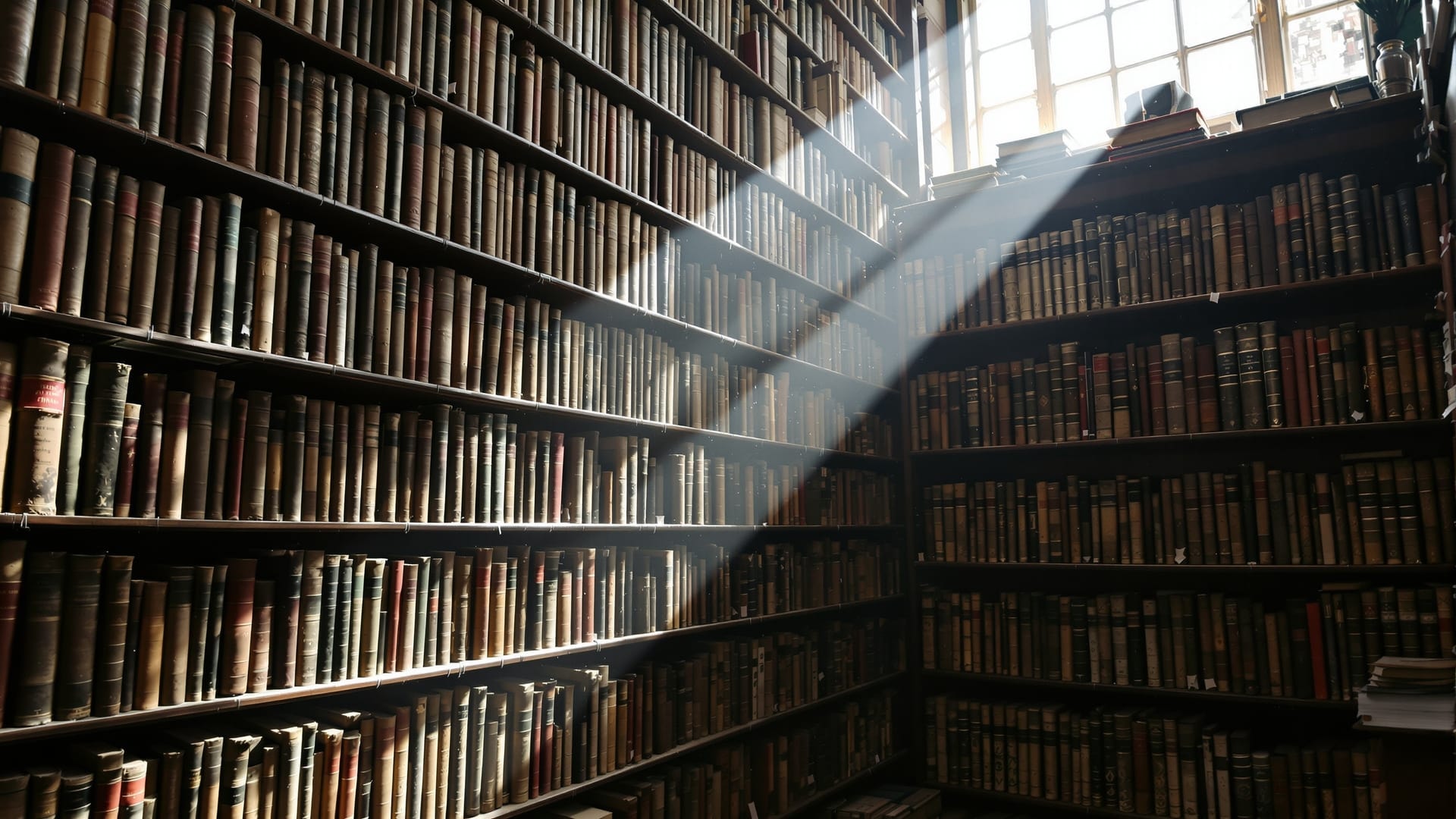
Next door to Baker Books, and later merged into it, was a used, rare, remainder and collectible bookshop called Remains To Be Seen. It ran tens of thousands of volumes, specialised in nautical, local and art books, and served as the back half of the main store's promise: if a book was in print, Baker Books would order it; if it had gone out of print, the shop next door would go and find it.
Both are closed. What is worth preserving is the method, because it is still how the trade works.
How an out-of-print search actually worked
The process the shop published was deliberately unromantic, and every step of it exists for a reason.
- Every available fact was collected first. Title, author, publisher, year of publication, subject. At least two of those were needed to locate anything; a title alone was frequently not enough, because titles repeat and editions differ.
- Edition requirements were stated at the outset. A first edition, a particular translation, a specific illustrator, the jacket present or absent — these are different books commercially, and the search had to be told which one at the start rather than after it succeeded.
- It took as long as it took. Time to locate varied with availability, price, condition and how narrow the edition requirement was. A used book ordered specifically did not arrive on the schedule of a new one.
- The quote came before the commitment. When the book was found with another dealer, the customer was contacted with the price, condition and edition before anything was bought.
- After that, it was a purchase. Out-of-print orders could not be placed on a look-see basis, because dealers do not accept returns except on a genuine mismatch with the description, and the shop had a limited window to judge that.
That last rule is the one customers found hardest and it is the one that makes the trade possible. A shop that absorbs cancelled special orders on scarce books is a shop that stops doing them.
What a used shop buys — and does not
The buying policy was equally plain. Books had to be clean and sound: nothing falling apart, mildewed, water damaged, missing pages or heavily marked. Most contemporary books with missing or badly damaged jackets were refused outright, because for anything published after about 1920 the jacket is a large fraction of the value.
The shop bought local history, local interest, nautical and art books; quality used books; rare and special editions; first editions and antiquarian material. It did not buy magazines, textbooks, encyclopaedia sets, book-club editions or annual publications more than a year old — mostly low-grade paper with no demand behind it.
And the point people most often refuse to believe: the printed cover price tells you nothing about a book's value. Condition, edition and collectability determine it, and a shop's offer also reflects how long the book will sit before it sells. Trade credit was typically worth substantially more than cash, which is the standard arrangement in the trade and remains a good deal for anyone who is going to spend it on books anyway.
The want-lists
The shop maintained standing want-lists built around the major awards and canon lists, because those are the runs collectors assemble: the Newbery Medal and the Caldecott Medal for children's books, the Pulitzer Prizes, the Nobel Prize in Literature, and the twentieth-century "hundred best" lists for both novels and non-fiction. Collecting to a list is the oldest way into book collecting — it gives a finite target, a clear condition standard and a ready-made education in a period's publishing.
The American Library Association administers the Newbery and Caldecott medals and is the authority on both; the Nobel Prize in Literature maintains its own complete record; and the National Book Foundation publishes the full history of the National Book Awards.
Why it merged
By the end of the 2000s the used operation had moved inside the main store, which is what happened across the trade as online listing made a separate shopfront harder to justify. New and used ended up on adjacent shelves — a better arrangement for browsing, and the one most surviving independents use now.