
The nautical history shelf sat next to the whaling shelf and overlapped with it constantly, but it was a distinct thing: voyages rather than an industry, and seamanship rather than a trade. It was maintained by a bookseller who built ship models — a model of the bark Wanderer stood on the special orders counter for years — and it showed. This was the least sentimental shelf in the store.
Joshua Slocum and the Spray
The figure this region claims most firmly is Joshua Slocum, the first man to sail alone around the world. Slocum rebuilt the derelict oyster sloop Spray at Fairhaven, directly across the Acushnet River from New Bedford, and left from here in 1895; he came back in 1898 having sailed more than forty-six thousand miles by himself. His own account of it, Sailing Alone Around the World, is one of the very few nineteenth-century sea narratives that is still read for pleasure rather than for study — plain, funny, and completely without self-importance.
The centenary of his return brought a fresh round of local interest and a run of short local biographies covering his life before and after the voyage, which the store carried and recommended. Slocum's disappearance in 1909, sailing south from Massachusetts, is one of the region's permanent open questions.
Rescue, wreck and the New England coast
A large part of this shelf was disaster and rescue, and most of it happened close to home. Michael Tougias's Ten Hours Until Dawn reconstructs a pilot-boat captain's attempt to reach a stricken vessel in Salem Sound in a February blizzard — a rescue that cost the rescuers everything. Kate Yeomans's Dead Men Tapping follows the loss of a fishing vessel run down by a barge ten miles off Cape Ann in flat calm, and the failed rescue that followed; its subject is really the gap between the people who go out and the systems that are supposed to reach them.
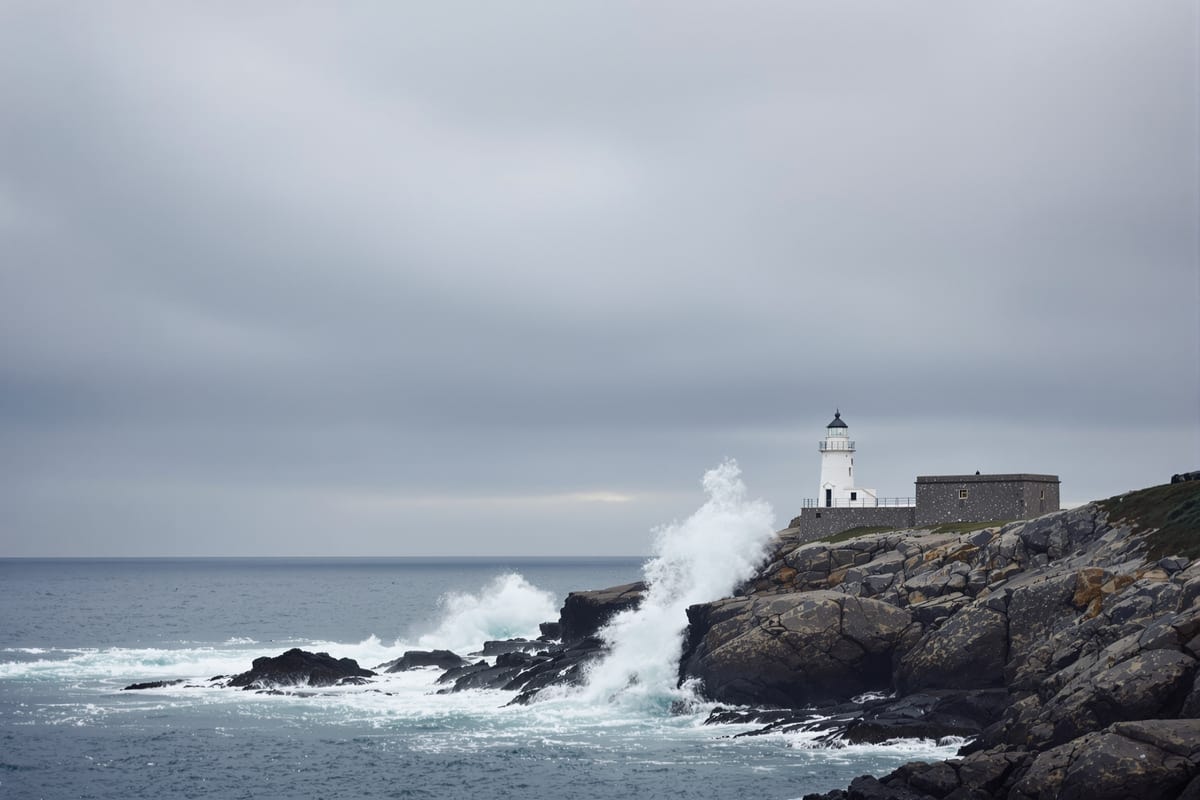
Lighthouses got their own steady trade. They are the most photographed structures on this coast and the least understood: the illustrated histories that sell well are worth having for the engineering as much as the scenery, and the New England examples in them are frequently the ones a SouthCoast reader has actually sailed past.
Great voyages
The shelf also carried the standard accounts of the voyages that redrew the map. Caroline Alexander's The Bounty went back to the court-martial records and produced a version of the mutiny that is considerably less tidy than the legend. Nicholas Thomas's Cook is the modern life of James Cook. Laurence Bergreen's Over the Edge of the World follows Magellan's circumnavigation from first-hand accounts. Peter Nichols's Evolution's Captain tells the story of Robert FitzRoy — the young captain of HMS Beagle who invited a twenty-two-year-old naturalist along, and whose own subsequent life went very badly indeed.
For the twentieth century, the two competing accounts of the Lusitania's sinking — Diana Preston's Lusitania: An Epic Tragedy and David Ramsay's Lusitania: Saga and Myth — were usually shelved together on the reasonable grounds that the argument between them is the interesting part.
The language
The oddest and most-loved book on the shelf was a slim notebook of nautical expressions — Nantucket Sleigh-Ride by Edward Lodi — collecting more than two hundred and fifty phrases that came ashore off ships and stayed in the language. The bitter end, slush fund, at loose ends, three sheets to the wind, the doldrums, splice the mainbrace: in a port city, half the idiom is maritime and nobody notices.
Readers who want the primary material rather than the retellings will find a great deal of it through Mystic Seaport's research collections and the National Archives, which hold the federal maritime records — crew lists, enrolments, wreck reports — that most of these books are built on.