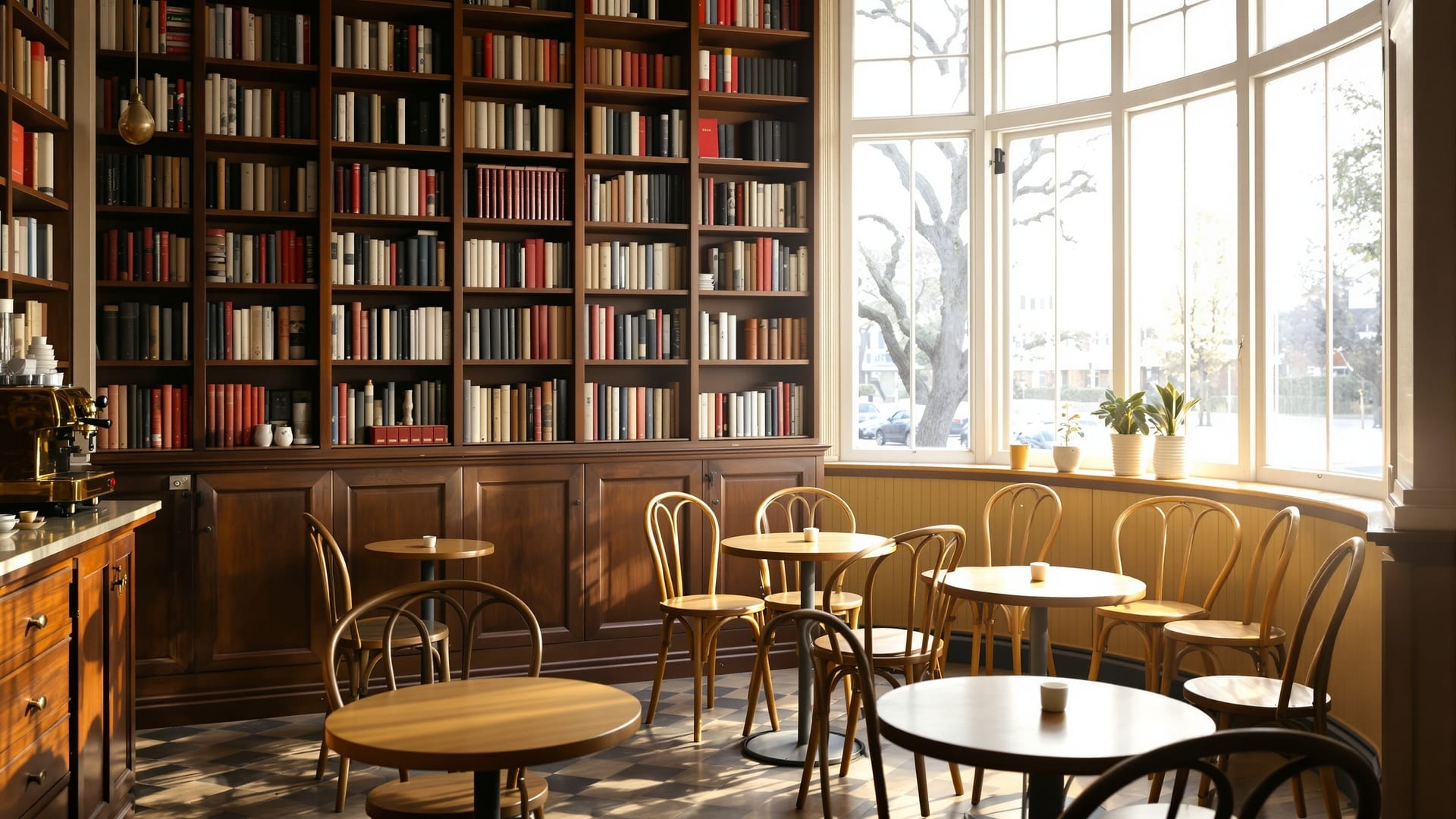
In the northeast corner of Baker Books there was a café called the Bean & Leaf. It served coffee, espresso drinks, a long list of loose teas, chai, hot chocolate, cold drinks and pastries, and it had a handful of tables among the shelves. Nothing about that is remarkable. What is worth recording is what the room was actually for.
The room, not the coffee
Bookshop cafés are usually explained commercially: they raise the average transaction, they extend dwell time, they turn a shop into a destination. All of that is true and none of it is the reason this one mattered.
The Bean & Leaf was the only room in the building where forty people could sit down facing the same direction. That single fact made possible almost everything else the store is remembered for. The author readings happened there. The book groups — more than half a dozen of them, meeting monthly — met there. The Open Book Series discussions were held there. The weekly children's story hour ran there. So did the poetry contest award ceremonies.
A bookshop without such a room can still sell books. It cannot host a community, because there is nowhere to put one.
Where the local-interest shelves lived
The other consequence of the café was less obvious and probably more deliberate. The store's local-interest section — the shelves the shop called the crown jewels of its collection, holding the whaling, nautical, fishing, Portuguese and local-history books — was sited in the café.
Think about what that does. The regional books are placed where people sit down with a drink rather than where they walk past with a basket. Local history is browsing material: heavy, illustrated, priced high, and bought by people who have had time to leaf through. Putting that section next to the tables is a merchandising decision that reads as a hospitality one.
The tea list
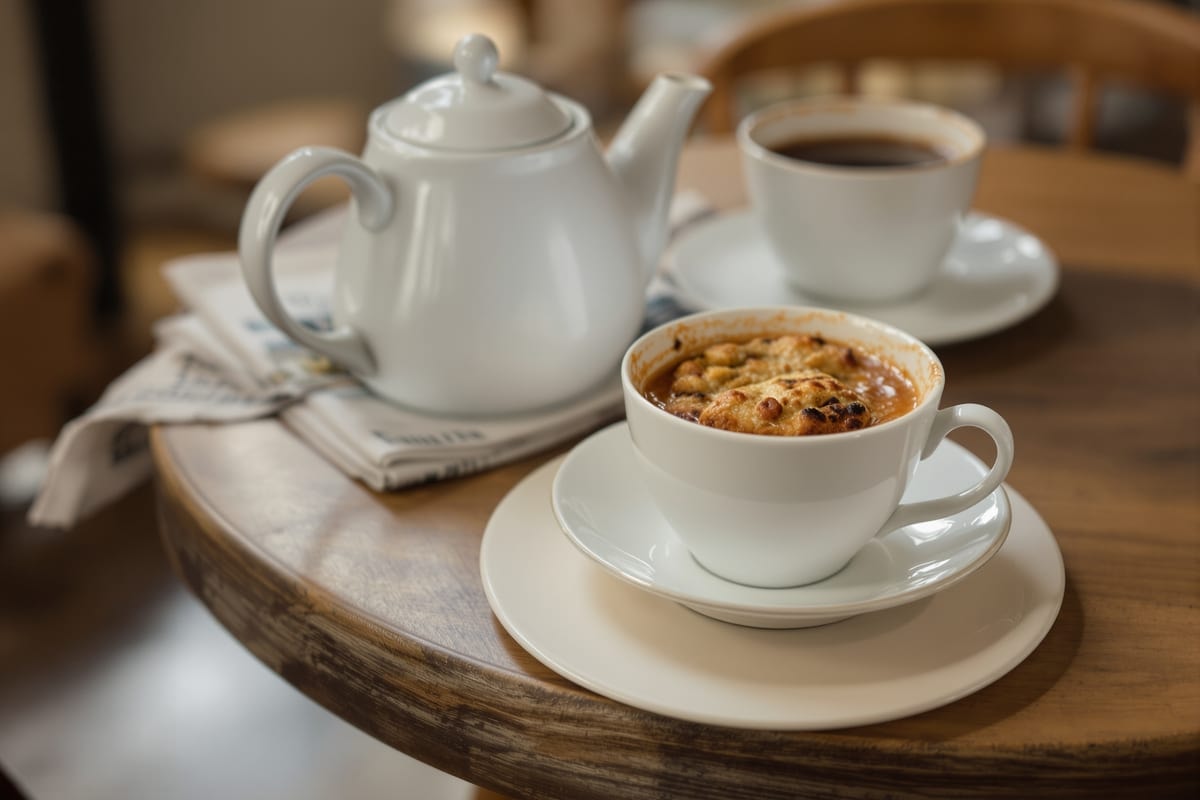
One detail is worth keeping for its own sake. The café ran a genuinely serious tea list at a time when American cafés generally did not — black teas, Japanese and Himalayan greens, a run of herbals, and chai, which the store took the trouble to explain to customers as an Indian drink of black tea, sugar and spices such as cinnamon and cardamom, and which it sold in the café and also as a concentrate and as a loose spice blend to take home.
The seasonal specials were exactly as unserious as café specials should be. The whole thing was small, a bit eccentric, and entirely the shop's own — which is the point.
What happened to the room
Around 2012 the store downsized substantially, moving from roughly four thousand square feet to about a third of that and refocusing on used books and special orders. That decision, made two years before the shop finally closed, is the one that ended most of the history described here.
A thirteen-hundred-square-foot shop can hold a good stock and a knowledgeable bookseller. It cannot hold forty chairs. When the room went, the reading series, the story hour, the book groups and the award ceremonies had nowhere to be, and a bookshop that had spent two decades functioning as a civic space became — through no fault of anyone's — a shop that sold books. That sequence is worth noting, because it is the usual one, and because it happens quietly enough that most people only notice afterwards.
A footnote from the 1990s
For a period in the late 1990s, the café also offered free World Wide Web access, on the store's stated reasoning that customers who were not yet online should be able to get familiar with the technology that was changing how everyone lived. A bookshop providing public internet access as a civic service, in 1998, is a small and rather touching artefact of that moment — and it is not the response most people remember bookshops having to the arrival of the internet.
The café closed with the store in 2014. The community-space argument it embodied is now a standard part of how independent bookselling explains itself — the American Booksellers Association treats the shop-as-gathering-place as central rather than incidental — but in a suburban New England bookshop in the mid-1990s it was still a bet.