Banned Books Week was a popular promotion at Baker Books from 1997 onward, and it outlasted almost everything else the store did. Staff turned over, sections were reorganised, the shop moved and downsized, and the display still went up every September.
The display
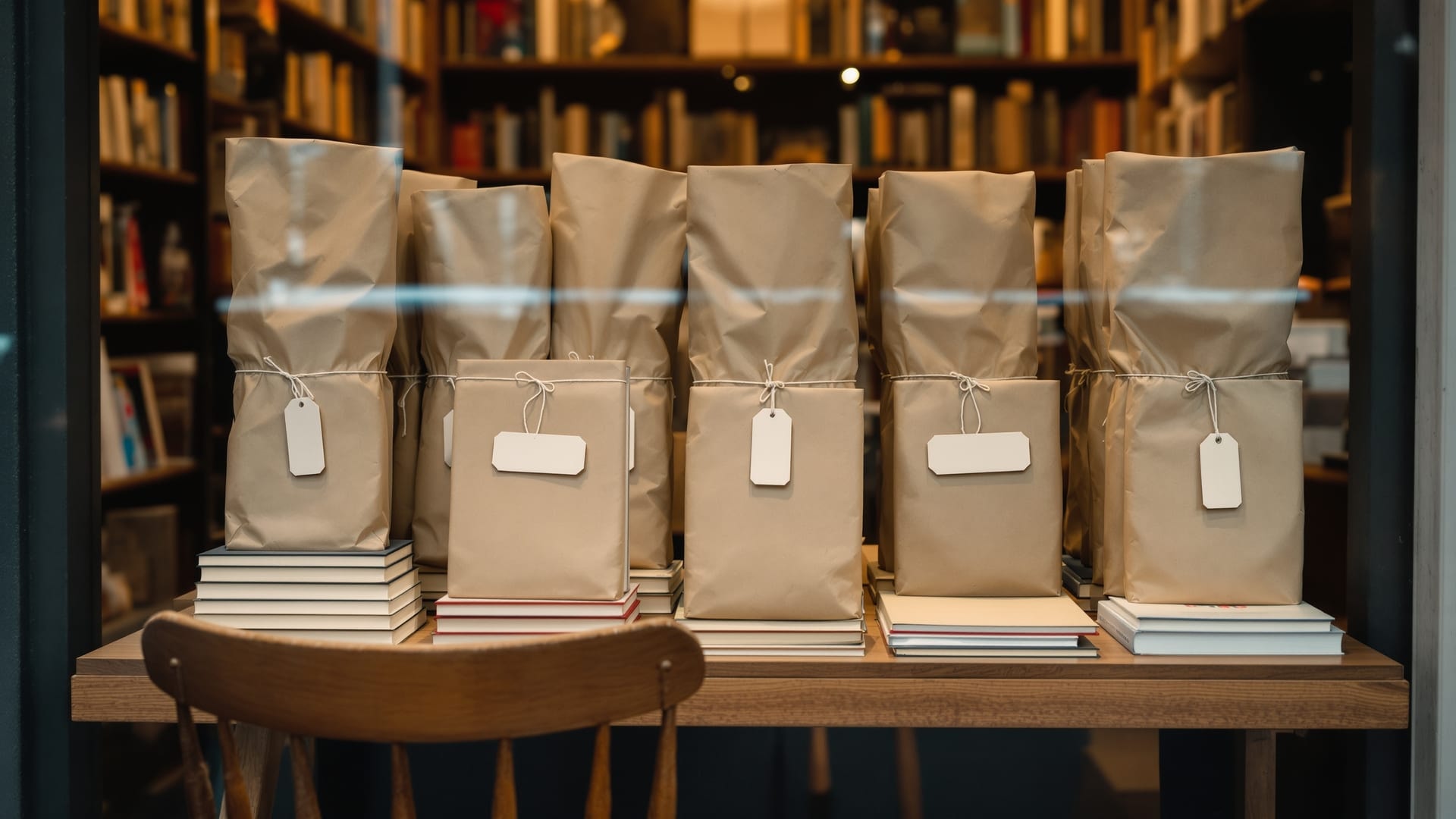
It occupied the front table, which is a real commitment in a shop that size — that table is where the season's biggest titles are supposed to sit. On it went the year's banned and challenged books, each one carrying the reason it had been objected to. Some years the staff wrapped the books in plain paper first, so a customer had to open one to find out what it was.
The tone was deliberately light and the substance was not. There is a long tradition of treating book challenges as a subject for gentle satire, and the store used it: the picture-book character accused of criminalising an industry, the small boy in a night-time fantasy charged with indecent exposure for not wearing his pyjamas, the underpants-wearing comic hero investigated for improper spelling and for making fun of what people wear, the boy wizard charged with encouraging children to practise witchcraft. All of those were real complaints filed by real people against real books in real libraries.
And as silly as the accusations sounded, the point the display made every year was that complaints of this kind had caused many well-loved children's books to be removed from dozens of private and public libraries. Not all challenged books are children's books, either — Maya Angelou, Kurt Vonnegut and Mark Twain came under attack repeatedly, and hundreds of titles are challenged, banned or expurgated from shelves across the country annually.
Triple credits
The store's one commercial gesture during the week was to award triple credits in its Baker's Dozen loyalty scheme on any banned or challenged title. It was a small thing that made the argument concrete: the shop was prepared to give up margin specifically on the books somebody had tried to remove.
What customers did with it
The consistent experience, reported by the store year after year, was that the reasons were what stopped people. Everyone arrives already agreeing in principle that banning books is bad. Very few people have read an actual challenge form. The gap between the abstract position and the specific objection — written by a named adult, about a specific page, in a specific school district — is where the display did its work.
Teachers came in for it. So did parents who had been on the other side of a school-committee argument. It generated more conversation per square foot of retail space than anything else the store did, which is not what a front-table promotion is normally for.
The paper-wrapping trick
The variation the store used in several years is the one most worth stealing. Books on the display table were wrapped in plain paper, so that the cover, the author and the title were all hidden. Attached to each parcel was only the reason the book had been challenged.
The effect on a browser is immediate and quite unlike reading a list. You read an objection — that a book was removed for sexual content, or for occult themes, or for conflicting with the values of the community — and you have to decide whether to unwrap it before you know what it is. A significant number of people, presented with the objection alone, guess wrong about what kind of book it is attached to, and that misjudgement is the whole argument in miniature.
The wider observance
Banned Books Week began in 1982 and marked its twentieth year while Baker Books was running it. It is co-sponsored by a coalition of library, bookseller and free-expression organisations; Baker Books participated through the American Booksellers Association, of which it was a member. The American Library Association compiles and publishes the annual challenge data, and the coalition site carries each year's dates and theme.
A fuller treatment of what gets challenged and why is on the banned and challenged books page.