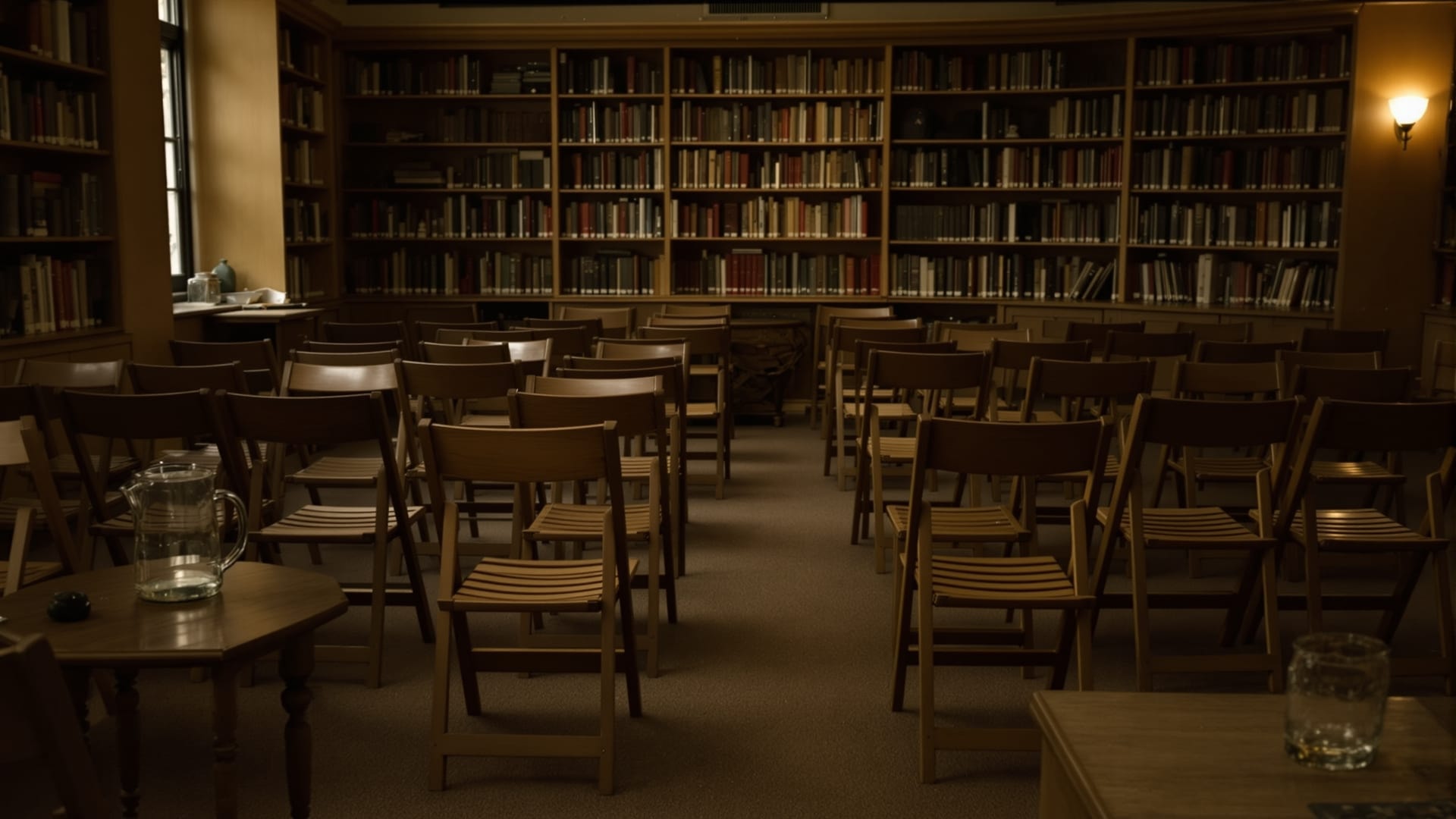
For a general bookshop of five thousand square feet in a city of a hundred thousand people, Baker Books ran an events programme out of all proportion to its size. Readings, signings, discussions and children's activities happened most weeks of the year, and — with occasional exceptions for ticketed collaborations — they were free.
The venue was the Bean & Leaf Café at the northeast corner of the store, which is why the store had a café in the first place. A bookshop with a café has a room; a bookshop without one has an aisle.
The weekly children's story hour
The most reliable fixture on the calendar was a free children's story time, held every Wednesday morning for children of roughly three to five, with stories, a craft activity and a snack. No registration was required — which is a deliberate design choice, because a registration requirement halves the attendance of any pre-school event and filters out precisely the families least likely to be already inside the reading economy.
There was also an ad-hoc arrangement the store advertised for years: on a wet morning, a group could ring before ten and the shop would do its best to put on a story time. That is not a scalable programme. It is a small business deciding that a rainy Tuesday with no customers is better spent reading aloud to somebody's playgroup.
Author events
The author programme ran the full range from national names on tour to first-time local writers, and the store was notably willing to host the difficult and the specialist as well as the commercial. Over the years the shop hosted, among many others, Suzanne Strempek Shea, Elizabeth Graver, Linda Greenlaw, Ann Hood, Jennifer Haigh, Jill McCorkle, Julie Garwood, Claire Cook and Susan Wilson. Non-fiction evenings covered subjects from offshore wind development to the social roots of school shootings to the modern history of privacy — see the non-fiction discussion series.
The formats were distinct and the store kept them so:
- Reading and signing — the standard event, open to all, no booking.
- The Open Book Series — an author-and-reader discussion, deliberately small and registered, followed by a public reading anyone could attend.
- The Author Chats — long-form interviews published by the store rather than performed live.
- Children's and family events — the weekly story hour, plus seasonal activities and the annual poetry contest ceremony.
Beyond the shop
The store's events work extended past its own four walls. It sold tickets for local non-profit productions and cultural events as a service, hosted fundraising sales for community organisations where the whole of the proceeds went to the group that produced the item, and sponsored a concert series at the city's restored downtown theatre. It also organised at least one recurring day trip for readers, described on the bookstore adventure page.
None of this was a marketing programme in the modern sense. It was the ordinary behaviour of a business that considered itself part of the civic furniture, and it is the aspect of independent bookselling that the American Booksellers Association and the New England Independent Booksellers Association have spent decades trying to make legible to publishers who measure stores by units sold.
Free, and why that mattered
With the occasional exception of ticketed collaborations, everything on the calendar was free to attend. That was not incidental.
Charging for a reading solves a real problem — it reduces no-shows and covers the cost of an evening — and it creates a larger one, because a ticket price converts an event into a purchase and filters the audience by income before anyone has heard a word. In a city with New Bedford's economic profile, a five-dollar door charge would have removed exactly the readers the store most wanted through the door, and would have made the weekly children's story hour into something families had to budget for.
The store also made a point of noting that its premises were wheelchair accessible, which in a converted retail building of that period was a decision rather than a default.
Afterwards
The store closed in 2014 and the events stopped with it. The regional reading calendar was rebuilt afterwards around the public libraries and the university, which is how it usually goes: the functions survive, redistributed, and the room where they all used to happen does not.