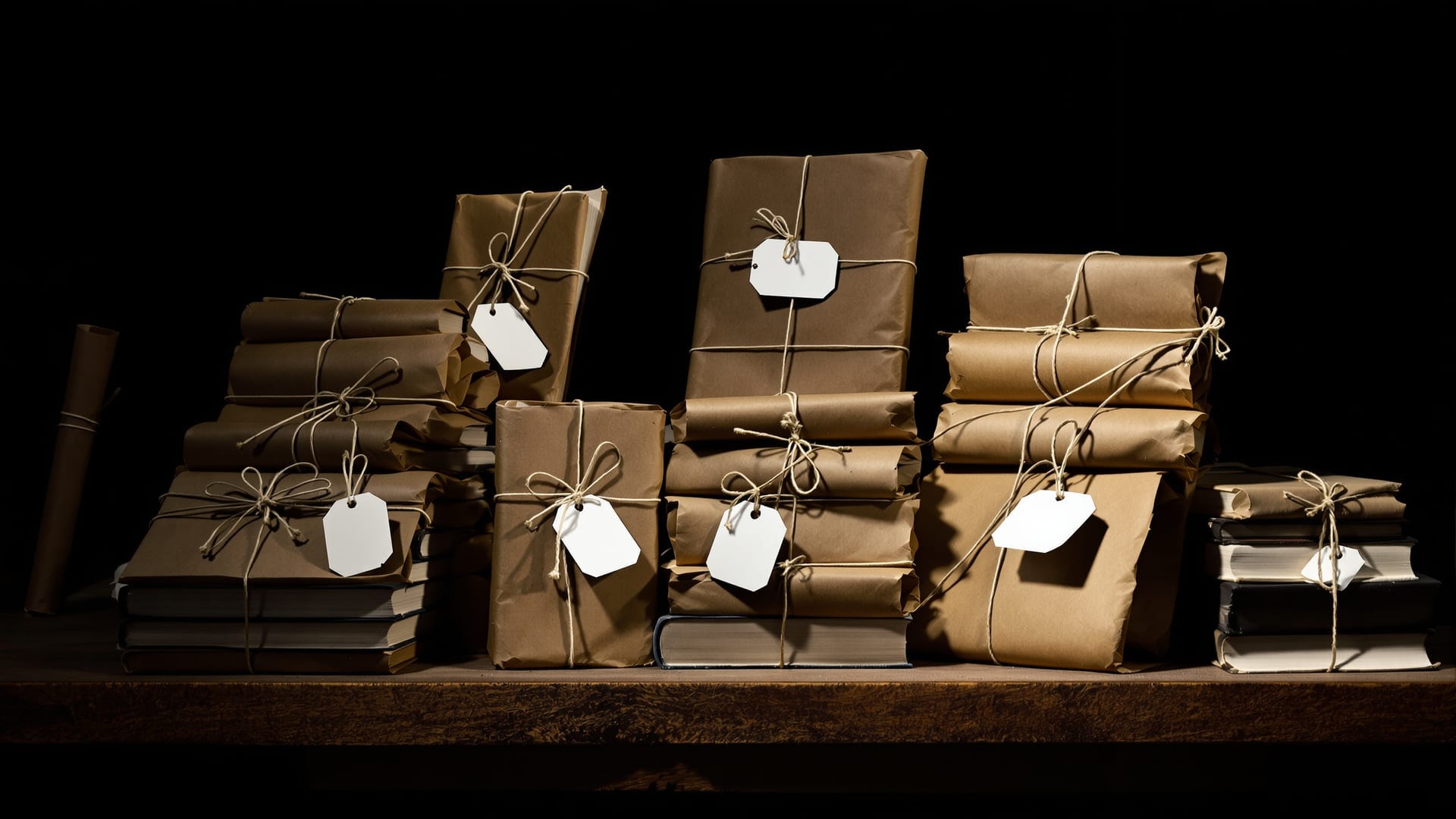
Banned Books Week was a fixture at Baker Books from 1997 until the store closed — the one promotion the shop ran every single year without fail. It was not a sales event in any meaningful sense. It was an argument, made annually, with a display table and a stack of bookmarks.
How the store ran it
The mechanics were simple and, in retrospect, unusually effective. Each September the staff built an in-store display of books that had been banned or challenged somewhere in the United States during the preceding year. Attached to every book was the stated reason for the challenge, in the challenger's own words wherever possible. Not a summary, not a paraphrase — the actual objection.
That single decision did all the work. A reader who is told in the abstract that books get challenged will nod and move on. A reader who picks up a well-loved children's picture book and finds a bookmark explaining that it was objected to for gratuitous nudity, because a small boy in it is drawn without pyjamas, tends to stop and read the whole table. The store's own summary of the effect was blunt: you may be shocked by many of the books people find dangerous.
What actually gets challenged
The lists the store posted each year, reproduced from the American Library Association's compilations, made two patterns obvious.
The first is that children's and young-adult books dominate. Most challenges are brought by an adult on behalf of a child, in a school library or a school curriculum, and the books at the centre of them are overwhelmingly the ones written for young readers. The recurring objections have barely changed in forty years: sexual content, profanity, violence, religious viewpoint, occult or witchcraft themes, and — increasingly over time — race and identity.
The second is that the canon is not exempt. Shakespeare, James Baldwin, James Joyce, Alice Walker, Toni Morrison, F. Scott Fitzgerald, Mark Twain, Shel Silverstein and Roald Dahl have all been challenged, several of them repeatedly and several of them recently. So have The Scarlet Letter, Moby-Dick and To Kill a Mockingbird, which have been objected to in individual districts on the grounds that they conflict with the values of the community.
The store enjoyed pointing out the comic end of the spectrum — a picture-book character accused of criminalising the forest industry, a children's series objected to for improper spelling and for making fun of what people wear, a fantasy series charged with encouraging witchcraft. But the comedy was a way into the serious point, which is that the removals were real. Books came off shelves in dozens of public and school libraries because of complaints of exactly this kind.
Who runs it and why
Banned Books Week began in 1982 and is a coalition effort, co-sponsored nationally by library, bookseller and free-expression organisations. The American Library Association's banned and challenged books resources remain the authoritative source for the annual lists and the underlying reporting, and the Banned Books Week coalition site carries the current year's programme. Baker Books took part as a member of the American Booksellers Association, which has been one of the sponsoring bodies from early on.
The case the store made
Two quotations turned up on the store's Banned Books Week material year after year. Holbrook Jackson: "Fear of corrupting the minds of the younger generation is the loftiest form of cowardice." And Oscar Wilde: "An idea that is not dangerous is unworthy of being called an idea at all."
Underneath the quotations was a First Amendment argument that the store made without much hedging. A bookshop that stocks only what nobody objects to is not a bookshop. The freedom to read is not a freedom to read approved things, and the practical test of whether a community believes in it is whether the objected-to book is still on the shelf in October.
The companion page on how the week worked in store covers the display and the customer response.